Metro renewal supports the development of the Helsinki metropolitan area
Metro has served as the backbone of public transport along the east-west corridor of the Helsinki metropolitan area for more than 40 years. Renewing the metro will ensure safe and reliable metro services well into the future.
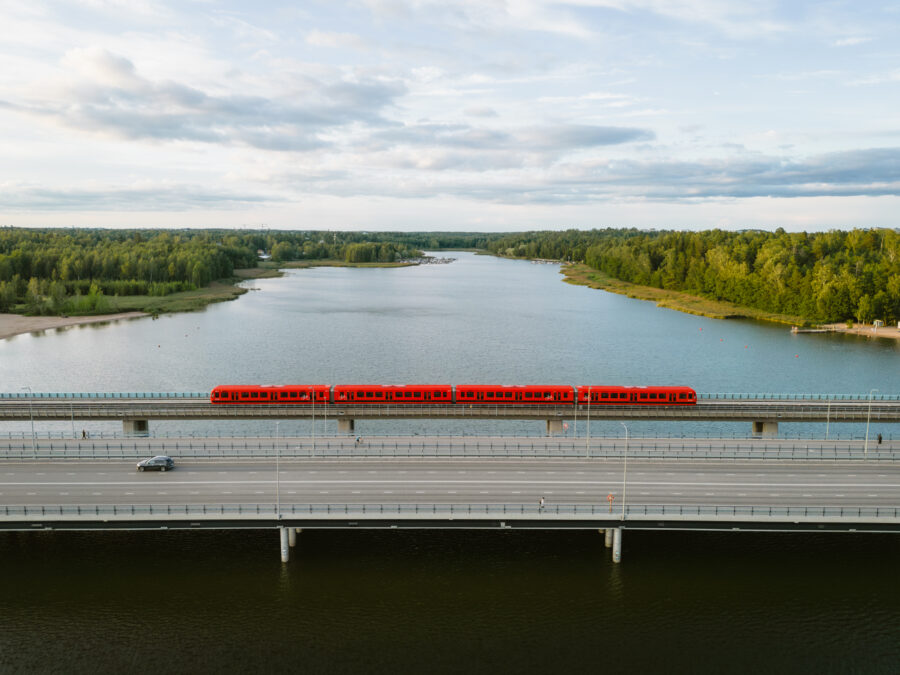
Metro in Helsinki carries hundreds of thousands of passengers every day, and passenger numbers are expected to continue growing. However, many of the metro’s systems are more than 40 years old and are approaching the end of their service life. These systems therefore need to be renewed.
The METKA project (Metro Capacity and Reliability Improvement Programme) will renew the metro’s ageing systems over the coming years.
Helsinki follows international examples
As part of the renewal, metro operations will transition from the current train control system to semi-automatic operation. In this respect, the Helsinki metro is following the development of metro systems in other cities. Semi-automatic GoA2 train operation is already used, for example, on Stockholm Metro lines 17, 18 and 19 and on the Victoria line of the London Underground.
The new system will be largely responsible for accelerating and braking the train. Metro trains will continue to have a driver in the cab, who will remain responsible for operating the train. Semi-automatic operation will make train services smoother and create the conditions for more frequent metro services in the future.
A well-functioning metro means a well-functioning city
The metro has served the city’s residents for more than 40 years. The improvements carried out as part of the METKA project will ensure safe and reliable metro services well into the future.
“Without a well-functioning metro system, transport in the Helsinki metropolitan area would be severely congested. The metro supports the city’s growth by enabling smooth mobility between the east and west,” says Anders Karlsson, Chief Operating Officer of Metropolitan Area Transport Ltd.
“METKA will enable reliable metro services well into the future. A well-functioning metro supports housing, jobs and economic growth,” says Johanna Wallin, Director of Transport at HSL.
Design phase under way
The METKA project is currently in the design phase, which will continue until spring 2027. During this phase, plans for renewing the metro’s train control system are being developed together with the system suppliers. The design phase will ensure that the train control system to be implemented meets the requirements defined for it.
The renewal of the train control system includes the metro’s automatic train control system, radio network and computer-based interlocking systems. The project is currently designing the interfaces between the various subsystems. M300 metro trains will operate using the semi-automatic system in the 2030s.
What is METKA?
The METKA project (Metro Capacity and Reliability Improvement Programme) will renew the metro’s ageing systems over the coming years. The project is a joint initiative established by City Transport Ltd, HSL, HKL, Länsimetro Oy and the City of Espoo.